About this Blog

Photo Writing is the web version of the Photo Writing mini-magazine produced by Limephoto and Emil von Maltitz since 2010. As of 2015 it is now completely online. Feel free to browse through the articles and please leave comments in the comments section if you would like to engage with us.

Wednesday, December 7, 2011

Updated Drakensberg Gallery


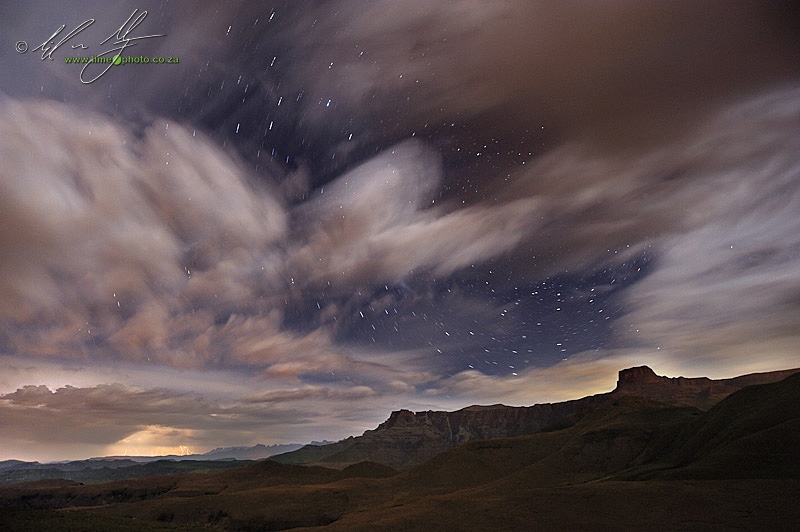
One of the things I seem appallingly bad at is updating the actual website. An early New Year's resolution is to finally catch up with this. The results so far can be viewed on the Drakensberg and Standard Bank Project galleries on the Limephoto Website. Hope you enjoy the images.

Tuesday, December 6, 2011

COP17 - Making Events Interesting


Okay, so I am fortuitously placed to be a part of the United Nations Congress of Parties, Durban 2011 climate talks. By fortuitously placed I mean that I live in Durban and people are desperate for photographers. So this means I spent the weekend shooting one of the side events to the full on COP17 negotiations. No I didn't make it in as a photographer to the main sessions, but in a way I'm relieved. Instead I ended up being the official photog to the Standard Bank hosted IETA conference.

The thing about event photography is that most of the time you are shooting business suit clad men and women looking dour-faced at times, disinterested at others. The goal is to make the proceedings look lively, interesting and above all, good. Not an easy thing to do when the height of lighting sophistication from some venues is a panel of halogen down-lights. Of course I speak from the highly biased point of view of an events photographer, NOT A JOURNALIST!! The journalist's job is convey THEIR version, or interpretation of the truth as they see it. An event's photographer is a hired gun in much the same way as an advertorial photographer is. You are paid to cover the event for publicity purposes, and if that happens to be propaganda for the client, so be it (we can have an ethical debate on this at another point...the basic premise being that if you have issues with the organizing party, then don't shoot for them...duh). If you agree with the party, then by all means accept the gig and enjoy the talks.

To the task at hand and the horrible down-lighting. For the most part I find shooting available light is often the best way to get interesting shots, particularly when you are using a long telephoto lens. The problem comes with trying to get more than just the usual shadows and here the advantages of being the event photographer start to play a hand...or in this case two light stands, one umbrella and three flashes play a hand. In other words, because I have relative carte blanche I am able to set up auxiliary lighting, so long as it doesn't interfere with the proceedings themselves.


For the first day I used solely available light. So the images of Minister Manuel and the big shot meeting were all done on high ISO on my D700. Thing is, this was on purpose. As an event photographer you don't necessarily want to interrupt certain meetings with flash bursts going off continuously (a caveat to this follows in a moment), particularly on the first day of the shoot if there are multiple days.


The first two images show no flash at all, only pure ambient light shots on high ISO (1600 or 3200 on the D700, 640 on the D3x). The second day's shots were then augmented with flash light. Again the advantage of being the official event photog is that people get used to seeing you around. On day one where a stray flash burst will irritate the speakers, day 2 and beyond they become almost nonchalant towards the flash (although always chat to the session's chairperson before banging away with flash). I've also noticed that not being journalist actually gets participants to open up towards me as the photog. They seem almost less reticent to be photographed. Incidentally the third image shows one of the shots with a bare strobe coming from the opposit side of the room so that I could get some interesting short lighting effects on the speakers.

The basic setup for the large room was to have a strobe placed high and in the center of the room facing towards the speakers and softened by shooting through a shoot-through brolly. This flooded the room with soft light and could be used on it's own if desired. Then on opposite sides of the room I had two more straight strobes (i.e. no modifiers) pointed towards the speakers but slightly feathered inwards. Using the Phottix Stratos II and setting the three strobes into their own group each, I was able to choose one, two or all three flashes at any given time. A little bit of trial and error just prior to the session helped me calculate the flash outputs and the basic settings that I would be using.


You can see how the opposing flash was used in the above shot. This meant that I could easily create either a rim light or short lighting depending on my position vis-a-vis the flash and the speaker. Definitely more interesting than the standard bog ordinary shot of a talking head.

Another great way of creating interesting shots is to do panoramic sweep of the room. Thanks to Adobe's photomerge, which has gotten increasingly better with each of the Photoshop iterations, panoramics are really easy. No you don't need a special head. The shot here was done with a 16mm lens on the vertical axis in a relatively small boardroom. It's not fine art, but it works for the task in hand.

Lastly there is the ubiquitous group shot. Shudder. Another setup of a line of individuals facing the camera. Sometimes this is admittedly necessary, but other times people want to have something that's a little different. Do the standard shot, then get people to do something different. You don't necessarily have to get corporate jumping on the spot as if they are at a wedding lampooning for the photographer, but certainly get them to do something different. In this case I popped a single strobe behind a shoot-through brolly on the ground, lay down on my back and shot the group as if they were upside down (at least that's what it'll look like in the viewfinder). Instant smile as the photographer, who everyone now knows because you have been hanging around for a while, looks like an idiot on the floor (or num-nuts as Joe McNally calls himself).


Like I said, it doesn't have to be high art, but if it's different, and if it's good, you will get a call back for future work!

Thursday, November 24, 2011

Going Grey


An interesting aspect of fine art photography, or at least the acceptance of photography as fine art by the general public (in South Africa at the very least but I've heard this from photographers in the UK and Australia well) is that it must be in black and white rather than colour. Scott Kelby rather cynically comments that to be accepted as a great photographer you must produce some black and white images. Although I think this is rubbish, I also think that Kelby is absolutely right. The acceptance of colour photography as a fine art medium is still to occur in much of the photography buying world. David Ward says much the same thing in his book, 'The Inner Landscape' when he muses that serious colour landscape photography is still to be explored - an interesting comment considering the exceptional work by the likes of Charlie Waite and Joe Cornish who are also personal friends of Ward's (or so we are led to assume), not to mention Ward's own work. 

Ground breaking work was done for the United States by Alfred Stieglitz and the rest of the 'Photo Secessionists' and later 'Group F64' in elevating photography to the ranks of Fine Art. If one looks at the number of Fine Art photographers around the world, the predominant number of them that make their entire living from prints and fine art media are situated in North America. This may be an unqualified statement, but it thanks to early masters in the States that photographs have been recognised as objets d'arts. Here in South Africa, and I would argue much of the rest of the Western world, photographs are seen -by the public- as something that can be created by anyone, that skill and artistry are not necessary requirements. "That's a great photograph, you must have a fantastic camera", is a common enough double-edged 'compliment'.    

Still, it is in black and white photographs people seem to see 'real' art. Which is a shame, as the world is beautiful in colour as well. In South Africa at least I have been to exhibitions by significant photographers where it is only the black and white images that garner the attention of the public. David Goldblat is a good example. He worked in both colour and black and white, but his exhibitions and books seem to hold mostly his black and white images. Obie Oberholzer is one of the few fine art photographers in South Africa who seems to be recognised as a 'colour' photographer, and it mainly has to do with the way that his colours are so strikingly vivid. He works with colour as a black and white master would work with tone. Yet, the last exhibition of his that I saw was shortly before leaving Grahamstown (he was also off to new pastures) and his beautiful prints were going for...well a song compared to even mediocre photographers in the States (just take a look at the prices of prints on the plethora of photographer's websites to get an idea).  


Not that I want to decry black and white photography. Heinrich van den Berg's stunning images in his 'Shades of Nature' are oftentimes breathtaking. the rich detail and tones become all the more obvious for their presentation in monochrome. Standing in front of an original Ansel Adams is almost indescribable as you look at the richness in texture and tone that he was capable of married to compositions that weld your eyes to the frame.

But colour should have a place too. I love black and white, but struggle to see in it. These few images are examples where I have consciously tried to think in black and white. I'm not convinced I was successful. the irony is that given the chance I would bet that some commentators would say these are better than the colour work that I strive towards. Juries out I guess.

Friday, November 18, 2011

Thanda Paused


November...and the world (or at least much of the Western world) starts to grind to a yule-tide induced lethargy. Businesses wind down - some earlier than others - and retail outlets gear up as the festive season is hailed in with the ring of the till-register. Cynicism aside it is a time to reflect on the year past. admittedly I might be doing this a touch early as I have just returned to the studio after another excellent week at Thanda Game Reserve with the African Impact Photography Volunteers/Students. This is also the last workshop of the year, hence the time to reflect.

Something that we should all reflect on as the new year approaches with a plethora of new toys emerging from the East (and Germany of course ;-) ): Do we really need a gazillion megapixels and the world's most advanced focusing engines in our cameras? Let's face it, if we are not getting the results we want from the camera, it's probably not the camera to blame. But I preach in vain I suspect (my itchy palms when the latest and greatest is presented to me is ample evidence of this). So it was refreshing this week to have one of my students work with her two cameras, a Canon 50D and an older 20D interchangeably. Looking at the images, which were good mind you, you could not tell which camera was used (and she shot equally with both). So what do we want from a camera? Be honest and you might find that rather than putting a mortgage up to buy the next best thing from Nikon, Canon or Sony the money might be better spent going somewhere to use your existing equipment. As an exercise price the lust items that you scan the ads for. then look and see what it would cost to go to that place you've been wanting to see for the past decade (Madagascar or the Galapagos perhaps). Telling isn't it (when you start talking pro gear you could probably afford to bring the family too)!

I am guilty myself though, having recently tucked into my savings and credit card to obtain a backup body (a used D700). I could have had a safari in Botswana for what I paid - and I think of this fact often. To me, the relief now when I go on a shoot that I have a fall-back is worth that though. Note, that the purchase was second hand and unlike the multitude that are waiting for Nikon's soon-we-hope-we-pray-to-be-released-D800 I bought something that is at the end of it's product cycle. It's a great camera and will continue to be so for years to come...I still wish I could go to Botswana though ;-).

So back to reflecting: the last year at Thanda has taken a photography project that was good in St Lucia to something fantastic at the reserve. We've had dozens of photographers join the project over the year, more than any year to date. We've even had returnees within the same year (hats off to Martijn and Cyndi who are currently staff). I have met incredible talent that is simply waiting for that moment to burst out and shine. Each month I'm in awe at some of the images that the students produce. Original, bold, technical and beautiful, professionals could take a leaf out of the many and varied books that these photographers create. They love photography. Wait, they LOVE photography. It is so easy to get caught up in billing, clients, pushing your name and images out there, that we can forget what brought us into this incredible pastime and vocation.

We've watched some amazing things happen on the reserve as well. Although I haven't been there for all of it, the students and volunteers have had incredible interactions with elephant, lion, rhino, cheetah, leopard, hyena and various other large mammals. The lion prides on Thanda (North and South) have kept the researchers scratching their heads at some of the strange behavior that they have recorded. Lions and wild dog have left the reserve and then subsequently returned. A caracal made the camp home for a day or two, geckos pooed untold tons of...stuff...onto pillow cases, and we all learned how to live without water (although I thankfully get to go home after a week).


It's been a wonderful year at Thanda. Although the year is yet to extinguish the candle (and work must continue), it's time for a pause at Thanda, at least for me. Next year, 9th of January the first workshop starts. If anybody out there is interested in joining, drop me a line. Thanks to yet another wonderful group that made me forget that what I do is actually work... (hehe).